

There's a version of dissatisfaction that's very hard to justify.
It's not the dissatisfaction that comes from something going wrong — a job you hate, a relationship that's broken, a life that's genuinely difficult. That kind of unhappiness makes sense to people. There's a cause. There's something to point to.
The harder kind is when your life, by almost every objective measure, is good — and yet something quietly, persistently doesn't fit.
The career is stable and reasonably fulfilling. The relationships are real. The home is warm. The days are full. You are not ungrateful. You know, on a factual level, how fortunate you are. And still, underneath the fullness, there's this:
A sense that you are living slightly adjacent to your own life. That the version of you showing up every day is a capable, well-functioning version — but not exactly the true version. That somewhere in the process of building all of this, something got left out.
This is what I mean by the difference between a life that works and a life that's yours.
How We Build Lives That Work

Most of us build our lives the way we were taught to — by following the path that made sense, meeting the expectations that were placed on us, making reasonable decisions in reasonable order.
We chose careers that were practical, or that we were steered toward, or that we fell into and turned out to be good at.
We built relationships around the people who were available and compatible.
We made tradeoffs — between what we wanted and what was responsible, between our own needs and the needs of the people we love — and we made them willingly, because that's what adults do.
And then, years later, we look up.
The life we've built works. It genuinely does. It houses real relationships and real achievements and real days that are often quite good. But it was built, largely, in response to the world around us — to other people's needs, to practical constraints, to the shape of what was available rather than the shape of what we actually wanted.
What it was not, often, was designed. Not by us. Not around the question: who am I, really, and what does the life that fits that person actually look like?
A life that works is built in response to the world. A life that's yours is built in response to yourself.
Most of us got very good at the first thing. Many of us never really learned the second.
The Symptoms Are Specific
The gap between a life that works and a life that's yours produces a very particular set of symptoms. You may recognize some of these.
A persistent low-grade restlessness. Not unhappiness exactly. More like the feeling that the frequency is slightly off. That you're tuned to a station that isn't quite yours.
The recurring thought you keep dismissing. There's something you keep thinking about — a direction, a change, a version of yourself — that you file away under "someday" or "not practical" or "who am I to want that?" And it keeps coming back.
Doing everything right and still feeling like something's missing. You are responsible. You show up. You do the work. And yet the payoff — the deep satisfaction, the sense of rightness — isn't quite there. You wonder if you're broken, or just asking for too much.
The performance of "fine." You tell people you're fine, and you're not lying exactly, but you're also not telling the full truth. Because the full truth is too hard to explain and sounds ungrateful and you're not even sure you'd know how to articulate it.
The moments of sudden clarity that fade. Sometimes — in a conversation, or reading something, or on a walk — you get a flash of it. The thing you actually want. The version of life that feels like yes. And then it fades, and ordinary life resumes, and you go back to not quite being able to hold onto it.
If you recognize yourself in any of these, you are not broken. You are not asking for too much. You are experiencing a very specific and very solvable misalignment — and you're far from alone in it.
Why It's So Hard to Name

One reason the gap is hard to talk about is that it sounds, from the outside, like a complaint about a good life. And we've been well-trained to be suspicious of that.
There's a voice many of us carry — quiet but persistent — that sounds something like:
What do you have to complain about? Other people have real problems. You should be grateful for what you have.
And because that voice isn't entirely wrong — we are fortunate, there are people with harder lives — we use it to dismiss something real and important.
But gratitude and longing are not opposites. You can be deeply grateful for what you've built and still recognize that it wasn't entirely built around you. Both things can be true. The longing doesn't cancel the gratitude. It points toward something the gratitude alone can't address.
Another reason it's hard to name is that the life-that-works is genuinely valuable, and changing it feels frightening and risky and possibly ungrateful for reasons we've just discussed. So we minimize the gap. We call it a phase. We wait for it to resolve on its own.
It doesn't. Because it's not a phase. It's information.
What a Life That's Yours Actually Requires
A life that's yours isn't necessarily a dramatically different life. For some women, reinvention looks like a major external change — a new career, a relocation, a lifestyle redesign. For others, it looks quieter: a shift in priorities, a pursuit finally taken seriously, a reclamation of parts of themselves that got set aside somewhere along the way.
What it always requires, in my experience, is three things.
Honesty about what's actually missing. Not the answer you think you should want. Not the answer that would be least disruptive. The real answer — even if it's inconvenient, even if you can't see the path to it yet, even if saying it out loud feels terrifying or embarrassing.
Permission to want it. This sounds simple. It isn't. Many women are extraordinarily well-practiced at wanting things for the people they love, and deeply unpracticed at wanting things for themselves without immediately qualifying or minimizing the want. The permission has to be given deliberately — and usually more than once.
A structure for actually moving toward it. This is where most "find yourself" conversations stop, and where the real work begins. Insight without structure doesn't change anything. Knowing what you want and having a real path toward it are two entirely different things.
The Question Worth Sitting With
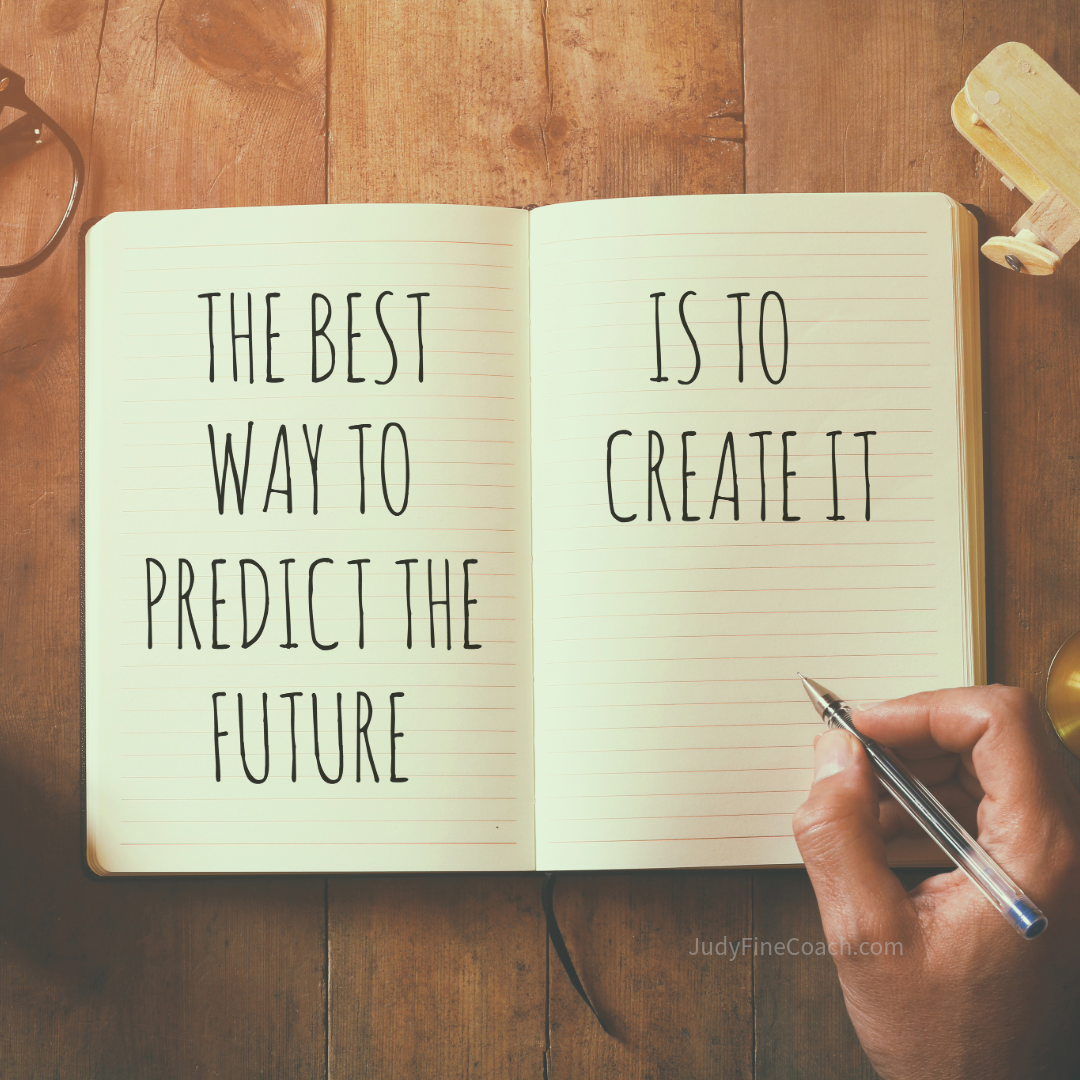
If you're somewhere in the middle of this — living a life that works, feeling the gap, not quite sure what to do with it — here's the question I'd invite you to sit with:
If you were designing your life around yourself — around who you actually are and what you actually want, not around what's responsible or expected or least disruptive — what would be different?
Don't edit it. Don't immediately problem-solve it. Just let yourself answer it honestly, privately. I've never met a client who couldn't find a way to bring pieces of what's missing into their current life. But it requires being able to name it first.
The answer to this question is the beginning of the life that's yours.
If you want support in answering that question — and turning the answer into something real — consider a single coaching discovery call. This is a real coaching session (not a sales call) where we look at what's getting in your way and discuss real solutions you can address with or without beginning a formal coaching relationship with me.
