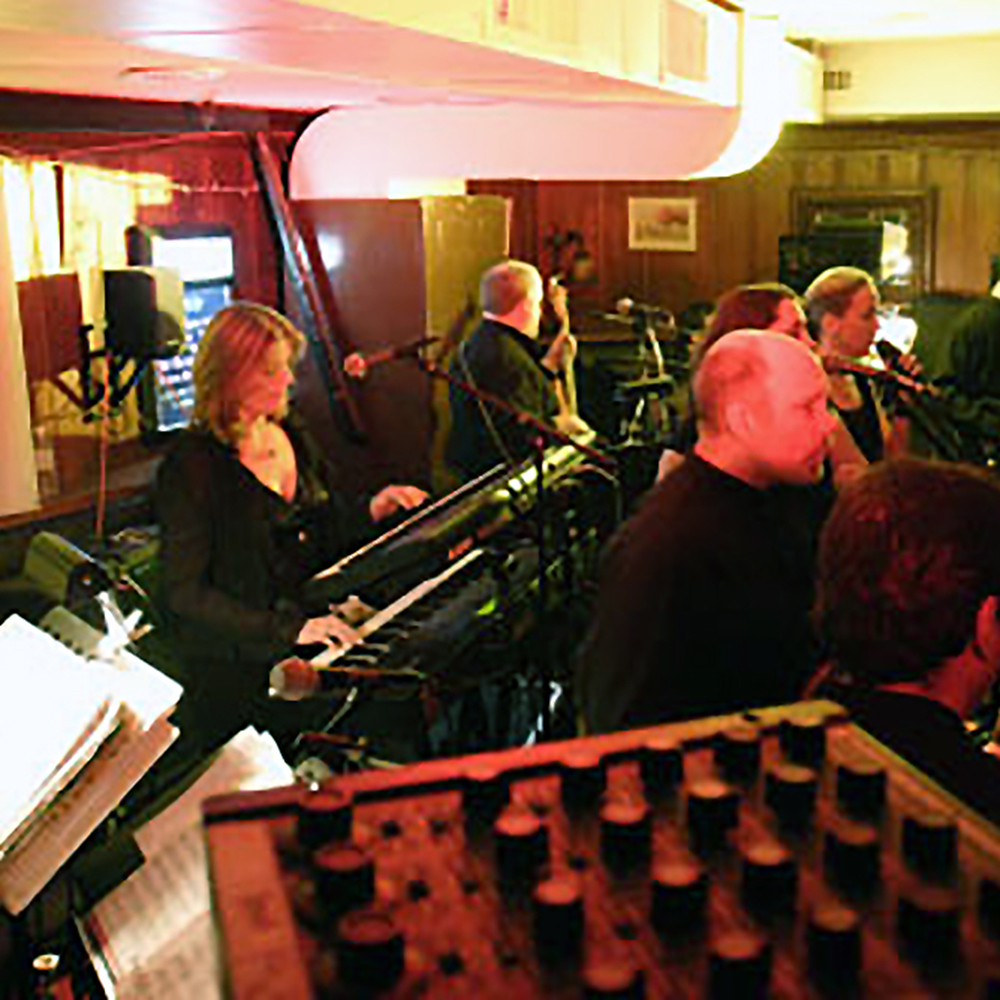
There are a gazillion reasons why pursuing any creative passion is a great thing to do. Creative pursuits give your life a sense of purpose and meaning, and shine a light on what's unique and special about you.
Pursuing your love of singing in particular can have numerous positive effects on your overall happiness and health. Here are five ways in which singing can contribute to your overall well-being:
1. Stress Reduction:
Singing, especially when you sing songs that you enjoy, can trigger the release of endorphins, which are natural mood lifters. This can help reduce stress, anxiety, and depression.
Singing also encourages deep breathing, which can activate the body's relaxation response and lower stress hormones like cortisol.
2. Improved Mental Health:
Singing provides an emotional outlet, allowing you to express your feelings and emotions through music. This can be therapeutic and help you process your thoughts and emotions.
Singing songs from your youth can be particularly cathartic and help you remember who you really are.
Participating in group singing activities, such as choirs or singing in a band, can foster a sense of belonging and community, reducing feelings of loneliness and isolation.
3. Enhanced Physical Health:
Singing requires the use of various muscles in your body, including your diaphragm, intercostal muscles, and facial muscles. Regular singing can strengthen these muscles and improve your posture.
Singing can also boost your immune system by increasing the production of antibodies and enhancing overall lung function.
4. Increased Confidence:
Singing in front of an audience, whether it's a small group of friends or a larger public performance, can boost your self-confidence and self-esteem.
As you improve your singing skills, you'll gain a sense of accomplishment and pride in your abilities.
5. Cognitive Benefits:
Learning and memorizing songs can stimulate your memory and cognitive abilities. It requires you to remember lyrics, melodies, and phrasing.
Singing can improve your focus and concentration, as it demands attention to rhythm, pitch, and timing.
You don't need to be a professional singer to experience these benefits.
Singing can be a joyful and fulfilling hobby that brings happiness and improved well-being to your life in whatever form you pursue it. Whether you sing in the shower, join a local choir, or simply sing along to your favorite songs in the car, the act of singing can positively impact your physical and mental health.
Her vision of success centered around becoming a contestant on the Voice. There was an audition in a neighboring state just two months away and she enlisted my help to prepare for it.
Within her first few lessons, several things became clear:
She had all the raw talent necessary for being a singer.
She had even more drive and ambition.
She wasn’t ready for the Voice.
I told Desiree that I believed she could be ready to audition by the following year, but she insisted that she didn’t want to wait. So, all I could do was my absolute best to help her prepare.
I wasn’t privy to everything going on behind the scenes for Desiree. I was, however, aware of two potential pitfalls:
Her parents were unsupportive of her desire to become a singer, and a huge part of her motivation was to prove them wrong.
She had a relentless sense that the Voice was her only right path for accomplishing this - despite my many attempts to point out that there are a thousand ways to be a singer.
Fast forward two months…
Desiree auditioned for the voice, didn’t make it past the first round, and became so inconsolable about it, she gave up singing altogether. I never saw her again.
Why am I telling you about Desiree’s squashed dream?
She is a slightly exaggerated version of a cautionary tale I witness all the time. And I want you to be sure you’re not headed down a similar path.
You have to support yourself the right way - even if the people around you don't support you!
The problem for Desiree’s dream of being a singer.
As I already said, she had raw talent and tons of drive. But she fell hard into two common pitfalls:
The wrong motivation.
A too-narrow vision of success.
The Wrong Motivation:
It may seem harmless to be driven by the idea of proving others wrong. But by itself, it’s unsustainable no matter the outer circumstances.
What if her parents never supported her dream, even if she did pass that initial round of the Voice?
What if they changed their minds and did begin to support her despite not passing that first round?
Either way, how would Desiree continue to motivate herself?
Internal motivation is the only sustainable kind. It makes you enjoy working on your voice and revel in the little signs of progress along the way. It makes you feel like you’re being the person you were meant to be – not the one that will “show your parents!” It feeds you instead of adding stress to your life.
A Too Narrow Vision of Success:
I’ll be honest. I’m not a fan of singing competition shows. They perpetuate misunderstandings about singing and about what it means to be a singer (and most of the judges’ comments are at worst, harmful, and at best, useless. IMHO).
Here are some of the wrong messages viewers can get from these shows:
“If I, at 30, can’t sing like the 10-year-old super singer I just saw on AGT, I can never be a good singer.” Um, no. Some folks start out with their “planets aligned” in a way that makes it come more easily for them, but most of us professional singers just worked hard at it over an extended period.
“If I can’t do riffs and runs like famous singers, I can never become a successful singer.” Um, still no. Not only can you work to develop your vocal agility, but you can be a great, successful, and loved singer without a single riff.
“The best way to become a famous singer is to win a singing competition show.” Let’s do some math. Singing competition shows have been popular for about twenty years. Let’s say we count the top three finalists of American Idol, AGT (which isn’t just for singers), and the Voice each year for that time. That would be 9 per year for 20 years, which is 180 singers over the course of 20 years.
It's a hard number to nail down, but Billboard estimates there are currently 1.8 million musical artists in the United States alone. They aren’t all singers, but we can imagine at the very least that hundreds of thousands of them are.
Compare that to 180 finalists over the past 20 years. Not only is getting onto a singing competition show and becoming a finalist incredibly rare, it’s also apparently unnecessary. Look how many singers are doing their thing without that!
The solution that could've saved Desiree’s dream of being a singer.
Desiree was motivated by external forces (proving her parents wrong) and had a too-narrow vision of success (HAD to be the Voice and HAD to be that year). Her goal of being a singer could have been achieved if she:
Found internal motivation based on self-belief and joy.
Reveled in small wins instead of over-focusing on final outcomes.
Had been open to the different ways her dream could have come into being.
By the way… if you want to audition for a singing competition, have at it. What a great experience! But if it doesn’t turn out the way you want – which is likely based on the math - try the next avenue.
To sum it all up…
I'll pass this to you now since you’re reading this because you also dream of being a great singer…
Do you have internal motivation based on self-belief and joy?
Do you revel in small wins instead of over-focusing on final outcomes?
Are you open to the different ways your dream can be realized?
Do you want help narrowing down what your current focus should be based on where you are today with your singing goals?
It’s always interesting when you realize your current path, no matter how fresh and new it feels, is something you’ve been heading down for years. The following post is one I first published back in 2013 and recently happened across while perusing the archives of a past website. Not only is the information still entirely relevant (especially as we near the end of another school year), but it reminds me that my current coaching model is one I’ve been building for a decade and more.
I mentor young people who want to make singing the centerpiece of their lives with a program that combines vocal and performance coaching with artist development and financial health. I essentially give young people what I wish I had myself when I was young, what I didn’t get from my university degrees in music. The timing is perfect for this kind of alternative path, since colleges charge immorally exorbitant tuition these days and yet leave many graduates no better off in the workplace.
If you and/or someone you love is considering a creative career, consider the questions in this article. If you’d like to go deeper with your exploration, schedule a free consult and I’ll happily help you think out your options. College will always be one option, but it’s not the only one.
Here’s the article…
Many times, when a young person expresses a desire to pursue a career in the arts, parents immediately try to steer them away. This article is, in part, for you parents who are experiencing anything from mild, quiet concern to downright refusal to pay for art school. This article is also for the young person considering the arts, so you can critically think out your dreams with or without your parents support.
I have witnessed variations on this situation from many angles over the years, from being the kid choosing music, to knowing the burden of paying loans on not a lot of income, to coaching the adult who is now a doctor but who feels unfulfilled because she didn’t pursue her musical dreams.
Because I’ve seen this so much, it actually breaks my heart when I meet a young person whose parents are trying to divert them from a creative career. I also understand it. We want our children to thrive in the world. There is no one right answer for every person but to get to the right answer for you, you have to ask the right questions. Here are a few…
For the parent:
Begin with the basic question, “What do I want for my son/daughter?” Come up with about five answers and for every answer you give, ask yourself three follow up questions:
Is my desired outcome guaranteed if he/she pursues a more “practical” career path?
Is this same outcome possible with an artistic career?
How can I help this outcome be achieved no matter what path he or she chooses?
I’ll explain more.
Let’s say your first answer to the first question is, “I want my son to be financially secure.” Your follow-up questions would be:
Is financial security guaranteed if he pursues business (law, psychology) instead of art?
Is financial security possible with an artistic career?
How can I help my son achieve financial security no matter what path he chooses?
Let’s say your second answer to the first question is, “I want my daughter to be fulfilled.” These would be your follow-up questions:
Is fulfillment guaranteed if she pursues business (law, psychology) instead of art?
Is fulfillment possible with an artistic career?
How can I help my daughter achieve fulfillment no matter what path she chooses?
You get the gist of it. I think you’ll find that all of the things you want for your children can be achieved no matter what they decide to do with their lives–as long as you are there supporting them and teaching them how to be successful. Meaning, if you’re worried that your son will be a starving artist for the rest of his life, refusing to pay for college is the worst thing you can do. The best thing you can do is teach him to go for money as much as fulfillment, to expect financial security and then do what is necessary to have it. Remember, the definition of “success” is incomplete without the word, “happy”.
But the reality is, some young folks don’t really want to do all that is necessary to be successful in their chosen art discipline. Which brings us to the next round of questions.
For the potential career artist/musician/actor, etc…
What exactly do you imagine yourself doing to earn a living? What challenges have others faced that you may also face? Are you up for those challenges?
Is a college degree necessary for this goal? Are their alternative (and more affordable) ways to gain the skills and experience needed to be successful?
Are there related jobs that could help you support yourself while you pursue your art (teaching, for example)? Do they require specific education that you should include in your studies (if you’re going the college route)?
What is it about music/art/acting that you love the most? What percentage of the time do you think you’d be doing those things? How do you feel about having to do the parts that you don’t like as much?
What work are you willing to do to support yourself until you can reach your ultimate goal, and what everyday comforts are you willing to go without?
What if it took you 8 years of working a day job (and possibly not making a lot of money) before you could earn a living at your goal? Would you still want to do it? Or would you prefer to pursue a more fulfilling primary job and make your craft your side gig?
Answering these questions fully will require time and perhaps some research. Your happiness is worth it so don’t skimp on either. Some will walk away deciding to be avid hobbyists rather than career artists. Others will decide that any potential struggle is worth following dreams. No matter what, though, the decision will be made with eyes wide open.
Older adults shouldn’t take singing lessons? Nonsense!
Some old wives’ tales never go away. One such tale is the idea that we grow older to a point where we become unteachable. Not only CAN older adults take singing lessons, but I have three reasons why you SHOULD!
Reason #1 for adult singing lessons: Older adults make better learners.
There are real advantages to pursuing a new skill later in life…
Most likely, you have a better big-picture view of how things progress than you did when you were younger.
You’re also less likely to stress the little things and more inclined to put time and energy into activities you enjoy.
You also likely have a self-awareness that you didn’t have when you were younger.
All these things are huge advantages when developing new motor skills.
Reason #2 for adult singing lessons: Pursuing a passion makes you happier, healthier, and keeps your brain sharp.
The data is in. There is a multitude of physical and emotional benefits that come from singing, like:
Lowered stress
Boosted immunity
Improved mental health
Improved memory
Improved brain function
Plus, pursuing a passion adds purpose, fulfillment, adventure, challenge, and fun to your life!
Reason #3 for adult singing lessons: You deserve to become the person you’ve always wanted to be.
If you’re like most adults who consider singing lessons, you first found joy in singing when you were younger. But for whatever reasons, family, job, etc… you didn’t pursue it. Now you have two options, decide it’s too late for you and walk away, or commit to going after something you love before it’s really no longer an option (you can’t do it from six feet under. Just saying!)
I’ve helped countless older learners pursue their singing dreams. Some are getting solos in their church choirs. Others are gigging out in public venues. Like Leonard, here!
How did he do it?
He embraced the athlete mentality. Which means, he
learned how his body works to sing
worked out his voice to strengthen the muscles involved in singing
developed the right motor skills and motor habits
and did these things with patience and persistence
And what’s THE most important truth to embrace regarding the athlete mentality?
You don’t have to be born with it!
Just like you don’t have to be born a jogger/bicyclist/soccer player to become one, you don’t have to be born a singer. The right adult singing lessons will train you to become the singer-athlete of your dreams.
People tend to believe that good communication is about knowing what you want to say. And that is certainly an important step. If you’re not clear on the message, it’ll be hard to deliver it. But this is only one step in successful communication.
I’ve heard others say that good communication is about listening. I understand the point of this statement, and it makes for a great Facebook meme. But once I know the What of my message, I hardly think listening would be the next step.
No. The next step after What is How. And this is where a lot of communication goes awry. We see things the way we see them, and we forget that the view, language, and experience is always different from another angle. That angle could be influenced by your past experiences, or your personal priorities, how you interpret certain words, or a myriad of other variables. And from that standpoint, no perspective is wrong. They’re just different.
Nothing drove this home for me more than my experiences practicing in bands. And when I began to apply a similar approach to the messages of my craft and business, it was equally beneficial. Before we get to that, though, imagine this scenario during a band rehearsal:
Drummer: Let’s go back to the part where I go (swings arms around wildly) bap-bu-bee-boo, taka-taka-tee, taka-taka-tee.
Rhythm Guitarist: You mean the section where I’m strumming on the upbeats?
Keyboardist: No. Where I play that string pad for eight measures, right?
Drummer: No, the part where I go (swings arms around wildly again) bap-bu-bee-boo, taka-taka-tee, taka-taka-tee.
Singer: You mean, when I sing “Ooh baby” twice?
Drummer: No. This part. Taka-taka-tee, taka-taka-tee.
Rhythm Guitarist: Right! Where I’m strumming on the upbeats.
Lead Guitarist: Just before the solo at the bridge?
Drummer: No. This part. Taka-taka-tee, taka-taka-tee.
Singer: Oh! I know what you mean. When I’m riffing on the word “looooove!”
Drummer: No! I quit! (starts taking down his set).
This is an exaggerated interaction, but only a little.
The problem in this scenario is that everyone understands the song from the perspective of their own experience with it. None of them is aware enough of the other members’ perspectives to be able to communicate productively. If the drummer knew what his bandmates were doing at the place in the song he wanted to practice, he’d have been able to easily communicate what he wanted.
The same goes for your craft, whatever it may be. If you have a great idea for a song, choosing the best lyrics and structuring them in a way that will be understood and memorable for the listener isn’t “selling out to the capitalist complex.” It’s putting your great message into a format where it’ll best be received. Isn’t that the point of having a message?
I often get pushback from creative folks who “don’t want to ruin their art by learning music theory.” But the reality is, Western music theory is ingrained in our culture. Our ears already know what it sounds like, training or not. You can innovate inside it, but everyone will know if you do it straight-up wrong. It’s like saying, I don’t want to ruin my writing by learning the alphabet. It’s silliness. But I’ve gotten a little off-track.
Changing how you communicate so you can be understood by someone who doesn’t think like you is not giving in or selling out. It’s being a good communicator. Which means, a well-delivered message will change according to circumstances.
If I want to help a singer who is very religious open up and let loose, I’ll tell him to spread his arms, look upward, and sing to God. If I want the same from an atheist singer who loves being out in nature, I’ll tell her to imagine she’s standing at the rocky summit of a mountain she just climbed and sing to the glorious setting sun. I don’t do this because I’m two-faced about religious convictions. I do it because good communication isn’t about me. It’s about the person I’m communicating to.
So the next time you get frustrated by someone who doesn’t understand you, ask yourself, “Am I being like that drummer Judy wrote about?” Then, instead of examining your message (or giving up), examine the receiver. And learn that person’s language.
The pursuit of a long-term dream takes work and persistence, and a whole lot of keeping your eye on the prize. Because of that, we can unknowingly create expectations that are unrealistic – something along the lines of “I can’t wait to finally get there so I can relax and know everything is fine.”
Hooked up and ready for our first RV adventure in 2013.
We’ve all had that feeling. The first time I hopped into an RV for an untimed adventure was in the summer of 2013. I had just closed my pop music school in Keene, NH, which had become a two-migraine-a-week nightmare thanks in part to the housing crash of 2008. I had such high hopes for the changes we were making, which created in me something I call a Destination Mentality. Meaning, on some level I believed that living in the RV would somehow mean I’d reached Nirvana, and all would be well.
Many singers do something similar. I was once asked by a potential adult vocal student, “How long does it take?” I don’t remember my exact response, but I think it may have been something like, “To do what?”
She was asking me how long before she could be a singer, maybe? Or be done working on her singing, maybe? Either way, this question was born of a destination mentality. Each accomplishment in singing and in life can lead you to three more things you’d love to make happen. At least, until you don’t want any of it anymore. Before then, there’s no real graduation.
When you finally get to implement the actual dream part of your dreamy plan, it’s still only one moment along the overall journey of your life. Just like every other day. And just like every other day, you’ll still be affected by your personal challenges and life’s ups and downs.
I hadn’t been thinking that way in 2013. So, when I didn’t immediately feel freer, when I continued to struggle to get to the next place in my career, when Michael and I bickered about stupid things that didn’t matter, I felt like we had failed.
Mistakes were made, the first being that I had succumbed to a destination mentality without realizing it. Another and equally important mistake was that I wasn’t running toward something. I was running away.
But life comes with you.
Change can bring stress and mental fatigue. That’s only a problem if you don’t expect it. If you’re kind to yourself, if you remember and appreciate the changes you’re going through, you can just roll up your pant legs and wade through the changes until the water recedes. And your dream will still be there waiting to unfold with you.
Go after your best life. Starting today. Just never forget that life comes with you.
Wanting to create things to share with the world can seem stressful for many creatives. They spend a lot of time wondering things like, What will people respond to? What will they be willing to pay for? What will get them to follow me on instagram?
Other creatives scoff at those types of questions and say things like, I don’t care what other people think. I’m not a sell-out!
But let’s be real. You’re creating something and sharing it with the world because you want others to be somehow touched by it. So, you do care how they feel.
At the same time, you’re not here to produce what others place an order for. You’re not a waitress. Instead of wondering what others want from you, ask yourself want you want to give them. Stop taking everyone’s orders and start showing them what’s on the menu.
When you know who you are you can fully be that person, and then your peeps will find you.
So, let me ask you again. Who are you?
For creative folks, a more targeted question to ask is, Who are you as an artist? – Or musician? – Or solopreneur?
“I’m a singer,” or “I’m a painter” are equally insufficient answers. They tell us the medium through which you’ve chosen to share yourself with the world.
But who are you?
Decades ago, I was in a cover band called CoolBernie. At the time, the people around me considered me a person who lived a bit on the fringe. Now, really fringy people wouldn’t have agreed, but to mainstream folks, I was out there. I was pretty transient, I worked incredibly flexible nowhere jobs to support my music habit, and I adamantly refused to be anyone’s girlfriend. I also swore a lot, never heard a statement that made me blush, and pissed off a lot of women with my views on wedding and marriage rituals (ask me some other time).
But look at me in this gig flyer (female on the right). Does that match anything I just described? I look as though I’m about to take tea with other Ladies Who Lunch. Where is my personality?
I’m not dissing myself or my looks – just pointing out how I was still avoiding getting to know and embrace who I was. On a deep level, I was afraid to ask myself the question – afraid of the answer. I was suppressing fear and artistic self-worth issues to pretend they weren’t there.
I didn’t put a clear artist persona out into the world.
I see it in others all the time. There are amazing singers out there who can sing almost anything well. And because of that, they sing almost anything. And because of that, we the audience don’t know who they are.
No, defining who you are as an artist isn’t selling out. This is business. And business is marketing. And marketing today is branding yourself. I heard a great quote recently, and I find it frequently bouncing around my head as I work from day to day.
There are no original messages, just original messengers.
This can be translated into, There are no original songs, just original singers. So how do you find your uniqueness? What songs should you sing? What kind of act should you create? How should you dress, behave, and interact on social media?
All these questions become easy to answer once you’ve answered the biggie: Who are you?
You must be so sick of this question by now. So, let me get you on the road to answering it using the following three steps. Ready?
1. Collect Data: The life you’ve lived thus far has a lot to tell you. The trick is listening to it. Sometimes we feel there is a certain way we should live, or a certain kind of singer we should be. And because of those arbitrary rules we’ve treated as gospel, we don’t allow ourselves to change or be how we really are. Looking honestly at how things have made you feel in the past tells you honestly who you are. Some questions to ask as you begin data collection:
What songs/projects have felt the most rewarding and made me the happiest both during and after completing them? Are they the songs that I think SHOULD make me happy, or the songs that made someone else feel happy, or did they really make ME happy?
What songs/projects have gotten the best response from others? Do these things line up with my answer to the previous question? If not, can I find/create more that appease both?
What general feedback have I gotten over the years? Do people tell me I’m funny? Caring? Crazy? Weird? Have I been showing this side of myself in my work? How can I inject more of these traits in my creative pursuits? If people are drawn to these traits in your daily life, they will also appreciate them in your creative life.
2. Examine Your Relationship With The World: Putting your creative self out there requires a balanced relationship with the world. Are you trying to share yourself as a peer with your audience or are you worrying about pleasing them (like a subordinate)? Do you see yourself as an imposter (a post about imposter syndrome)? Do you struggle with performance anxiety (another post)? Is the social chameleon in you stopping you from knowing yourself (yet another)? Working through these sorts of things will make a world of difference in your performances, both artistic and everyday performances.
I also encourage you to put aside all your expectations and ideas about how you SHOULD be in the world, and take an honest look at who you naturally are by pondering questions like these.
How do you want to be seen by others? Notice, I’m not asking you how you think they see you or want to see you. How do YOU want to be seen?
What do you want people to think of when they think of you? What values, strengths and quirks would you like them to see?
How do you want to be remembered? When you leave a room or performance, what human feelings and impact (beyond “what a great singer!”) do you hope to leave behind?
Are you making decisions in your life (artistic and in general) that align with your above answers? If not, what stops you? Is it fear? Are you trying to be something that isn’t a good match for how you truly are?
What can you tweak, add, or eliminate to better align your day-to-day life with your above answers?
3. Assess Your Craft: A common question I get from singing students goes something like, “How do I know what songs are best for my voice?” I won’t say this is a bad question, because it’s not. But it’s the wrong question. This question supposes a right-or-wrong approach that is determined by outsiders or other external sources. It also assumes that you can’t further hone your craft in a way that you want.
Outer feedback is merely a tool for collecting data or improving skills, never for determining who you are as an artist.
The artist inside you is the only one to consult for that. Here are better things to ask yourself:
How do I want to feel when I’m singing (or creating any project)? What kinds of things do I want to express? Do I want to make a party? Make people think? Make people rebel? Not every song or project will be the same, but what’s the overriding emotion or perspective I feel drawn to expressing right now?
Are there feelings that I’m not capable of putting across in my projects? What skills can I hone to better express those feelings, or how can I inject my current skills in a different way to get the desired emotions across?
What things about myself or my craft have I considered flaws up until now, and how can I turn them into features? A breathy and almost weak voice has worked great for Suzanne Vega. Some might call that kind of voice flawed, yet every time I hear one of her songs I know it’s her because no one else sings like her. That sounds like a feature to me. What are you calling a flaw that you could turn into a feature?
Collecting data from your life, examining your relationship with the world, and honestly assessing your craft are the three primary categories to delve into as you learn who you are as an artist. I hope doing so will help solidify your path as you pursue your creative goals. Just keep these two last things in mind:
You will change as you grow. Revisit these questions periodically in your life and allow yourself to evolve.
You may learn that something you were certain was true is, in fact, not. That’s okay. Add that knowledge to the data you collect and change your conclusions.
After performance anxiety and imposter syndrome, the next top hurdle between many folks and their ability to perform confidently in life is being a social chameleon.
The term social chameleon refers to a person who unconsciously adapts traits, actions, opinions, etc. to fit whatever environment they find themselves in – the way a chameleon changes its colors to fit its environment. Like all traits, there are benefits and drawbacks to being this way. You can both do better in group dynamics than others but lose yourself in a way that they don’t because you’re not being who you are. On top of that, there’s something very important to understand about the social chameleon.
The chameleon isn’t just social.
My backyard garden wedding 1993
I completely wasted my twenties. Not with fun things, like partying too much. I wasted it by being everyone’s perfect chameleon. Sometimes proudly so.
A person wasting her twenties isn’t unusual. The twenties are when we test out our first prototype of the person we think we want to be. We’re working entirely on hypotheses with no actual data to support our suppositions. It’s our first shot at learning who we are.
Part of learning who we are is learning how we fit into the world. Social chameleons fit pretty well, or at least are good at pretending to, because they adapt so easily. But in my twenties, my chameleon also came out in two very important and intimate areas of my life:
My dreams and my relationships.
My chameleon heard a relative say, “But don’t you want to get a real job?” and she thought, “Well a master’s degree could lead to a pretty respectable career. I think I want to go to grad school.” And I did, despite not wanting a “real” job.
My chameleon heard my boyfriend say, “We should get married,” and she thought, “He’ll be so disappointed and hurt if I say no. I guess I want to get married.” And I did, despite not being anything close to ready for marriage.
I was good at fitting in when I wanted to, and this helped me avoid a lot of real-time discomfort. Yet, I repeatedly allowed my adaptation skills to determine the trajectory of my life, which led to much future discomfort. The chameleon taken to this extreme is a kind of performance anxiety. How other people feel about your performance in life becomes more important than how you feel, in part because you fear the discomfort of an audience that won’t clap.
Between my performance anxiety, imposter syndrome, and chameleon tendencies, my twenties became an endless barrage of what my ex-husband would have called revving the gas in neutral. I worked, stressed, and racked up debt for a life I didn’t want. With each chameleon action implemented, I sank a little deeper into a pit of depression and invisibility.
Wow. Sounds pretty bad, huh?
But here’s the amazing part. We each have a person inside us, our real selves. This person knows who we are and what we need. And they are waiting to be set free, one way or another. When I look at pictures of myself from my twenties, I can see that confident person in there, not yet ready to step forward but there. And I feel sympathy for her that she had no one in her life to see what was happening and help her find a way out.
Me, 1991, in the Negev.
She did step forward when the time was right.
It took much more time than is desirable, but I suppose it was inevitable. The outer me had become so numb and broken that the real me sort of leached through to the surface. One day, without knowing it was coming, I heard myself say to my now ex-husband, “I need to take a break.”
That person inside me saved us both. That was the day I hopped off the wrong path and began building the confidence and sense of deservedness necessary to put myself before my audience. That’s the key.
You before your audience.
This is why I do what I do today. Because I want to be for others what I didn’t have for myself.
And here’s an interesting side note. That family member who thought I needed a “real” job ended up clapping for me years later (metaphorically speaking) once I found my way.
Performance anxiety, imposter syndrome, and the chameleon have a way of teaming up and supporting each other as they throw us and our lives off the rails. No matter what measurement of each you see in your life, all three should be managed if they’re there at all.
So, tell me. Do you have chameleon tendencies?
There’s an easy way to check in and see. The next time you’re about to share a thought, idea, or update on your life, etc… ask yourself, “Am I about to say what’s true for me or what I think the person listening wants to hear?”
I promise you, it’s never too late to be who you really are.
My last post was the first in a three-post series discussing three common demons that get in the way between us and our best everyday performances in life. In this post, I want to talk about imposter syndrome. I’ll start by sharing my personal dance with demon number two.
My path toward a life of music started when Boyd Bennett came to visit my kindergarten class to teach us about brass instruments. He and his brother owned the local music school, Bennett Conservatory, in Croton-on-Hudson, NY. At the young age of five, I was already someone who liked things that were different. Because of that, I decided I wanted to play the trombone. It was the only instrument with a slide instead of valves.
Music came easily for me. I had my first live performance at age six, when I played When the Saints Go Marching In on the trombone at a Bennett Conservatory recital.
I so wish I had a picture of that.
Over my school-aged years, I auditioned and got into many all-county and all-state bands, once performing a solo at the beginning of a piece while standing out in front of the orchestra.
While in high school, my middle school music teacher, Mr. Godfrey, would take me with him to the elementary school to help new music students learn to play.
In college, I was a composition student, but my primary instrument was piano. This meant having to pass four piano juries and four composition juries, all critiqued by the appropriate professors in those fields.
I share these details not to impress (or bore) you, but to make an important point that perhaps you can relate to.
Despite these and other successful experiences under my belt, I went out into the world feeling like a complete music imposter.
That’s what people with imposter syndrome do.
“Imposters” routinely discount any accomplishments they’ve achieved or give the credit for their successes to others or outside factors. Imposters overwork to make up for their perceived inadequacies and when their work is well-received, believe that it’s a result of luck or oversight on the part of those giving accolades. And most stressful of all, “imposters” live with a fear of one day being discovered for the frauds they really are.
And so it was for me. It didn’t matter how many musical successes I had, or how quickly I could learn new musical things. In cover bands with musicians who were self-taught and couldn’t speak the language of music theory, I still felt like a fraud.
Now part of this is gender related. Imposter syndrome is enhanced by low expectations and cultural messaging that you “cannot” be good at something. That means it’s a little more prevalent in women and minorities. But it still afflicts more than 70% of all people.
Like every topic in this blog series, there are too many variables to specifically address your personal experience as an “imposter.” As with every personal growth goal, layers have to be peeled away by examining the messaging you grew up with, your past experiences, etc… This is best achieved by working with a coach. But I want to leave you with some tools to think out imposter syndrome, in case you can relate to what I’ve talked about so far.
So, here are some thoughts to consider as you work toward imposter syndrome management:
Talk about it. Since imposter syndrome is so common, you may find that people you feel intimidated by are also experiencing it. Sharing can greatly lighten the emotional load.
Get feedback from someone you trust. The worst feedback isn’t negative feedback. It’s no feedback. For many “imposters,” that gives license to assuming the worst. Positive feedback tells you you’re doing great. Constructive criticism makes it clear how you can do better. Both stop the imposter mind from messing with you.
Out your secret shame. Think of an event or events that took place in your past, possibly something you’ve labeled a “failure,” that you have up until now not wanted others to know about. It should be something that flares your imposter’s shame and that you’ve viewed as proof you’re a fraud. If something comes to mind, out yourself about it. Tell someone or many people. You’ll find that it doesn’t define you the way you thought it did (meaning, other people won’t care) and it will lose its power over you.
Living with imposter syndrome can be exhausting and painful. Learn to manage it however you can. Let me know your thoughts…
This post is the first in a three-post series, covering the most prevalent culprits that stand between people and their best-performing selves. I have dealt with all three to varying degrees and at various times in my life. So have many others, maybe including you. They are performance anxiety, imposter syndrome, and the social chameleon.
For now, I want to talk about performance anxiety, since it is the mother of all demons standing between you and your best everyday performances.
And notice I say everyday performances. Not just artistic or business presentations. I’ll tell you what I mean by that, but first, a little about my dance with this demon.
When I was a kid, a had a crappy little tape recorder. Yes. That’s how old I am. I loved singing in my bedroom and had a rich fantasy life where I owned a theater that produced musicals using the latest pop hits. I’d listen to the radio and when each next hit from one of my “musicals” came on, I would “practice” that “scene.”
One day, I decided I wanted to record myself singing one of these songs on my crappy little recorder. I practiced the song over and over again until I felt ready. Then I hit record. Immediately, my throat clenched up, my voice squeaked, and I could no longer remember the words.
Welcome to the world of performance anxiety.
Nothing changed regarding my ability when I hit that button. All that changed was the knowledge that I was being recorded. It triggered my fear of stinking at things that are important to me.
So what, if you didn’t like it? you may ask. Couldn’t you just delete it and try again?
Well, sure. That’s logical. But anxiety isn’t. Besides, it wasn’t just a fear of other people thinking I stink at singing. It was a fear of me finding out I stink at singing. A recording would be proof!
Now, if you’re saying to yourself, “This has nothing to do with me. I’m not a singer,” hang in there. I’m getting to you…
This performance anxiety followed me into my musical adulthood. There’s no nice way to describe it. As a singer and keyboardist in the cover band world, my performance anxiety made me an asshole to myself.
For days leading up to a gig, I was an impatient stress-case who hated how I looked and who was getting a cold. I mean it. I got a cold every time. I wasn’t faking it. The symptoms really came.
At my early performances, I would start the first set being the semblance of a normal performer. But with each little mistake, which to me were all huge and boldly telegraphed to the room, I would turn down the volume on my keyboard. Some nights, I’m not sure anyone could hear me at all by the end of the third set. Then I’d go home, and instead of sleeping, I’d rehash all the ways I had been inadequate at the gig.
See? I was an asshole.
Circa 2003 playing keys in Brattleboro, VT.
Honestly, I don’t know why I kept gigging. But fortunately, I did. And over time, I learned to work through it all. I promise anyone reading this that you, too, can learn to work through it (even if you’re not a singer – still getting to you!). The things I learned to help myself manage that anxiety became the methods and tools I use to coach others to more confident performances today.
But how does all this pertain to you? Especially if you’re not a performer (finally, we’re here!)?
All the world’s a stage. So said Shakespeare, anyway, and he was right. But it’s not just that we’re born, play our role, and then make an exit. It’s because most everything we do is a performance. Giving a speech. Being interviewed for a job. Asking someone on a date. Saying how we really feel when we know it’ll disappoint someone. These are all kinds of performances.
As with music, I struggled with everyday performances like these well into my thirties. Believe it or not, the music performances were sometimes easier to deal with. After all, they were rehearsed, and I had tools on stage (aka, cheat sheets) when I needed. But put me in a real-time situation where I needed to tell someone intimidating what I charged, or a guy I was dating that I wasn’t that into him, and I really struggled. No lie, I went on quite a few dates I didn’t want to go on because I couldn’t just say, “Yeah, no. Thanks.” And these are the small but oh so important things that a life is made up of. If you rack up enough of these seemingly inconsequential moments, it becomes a whole lot of not my life.
The majority of the most important performances in our lives barely register as a thing. And most are unscripted.
Imagine being out to dinner with a friend and she runs into someone big in the field you’re trying to break into. She introduces you. Lights, camera, action!
Or you find yourself in a situation where you need to stand up for yourself. Or set a boundary with a loved one. Or correct an important misunderstanding about something that happened at work. All of these are important everyday performances where you want to keep your head and communicate clearly and concisely. People with performance anxiety can struggle with any of these situations.
If everything is a performance, you may ask, why doesn’t everything I do trigger my performance anxiety?
That’s a great question. Thanks for asking! Something has to be at stake. Your reputation. Your self-worth. Your emotional or physical safety. Something important to you must be at risk.
If this resonates with you, the natural next question is, “What do I do about it?”
Improved performance skills don’t come about from reading one blog post. They develop over time as you practice performing. One way to accomplish that is to join forces with an experienced performance coach (I can recommend one!).
Meanwhile, below are some tips to get you started in the right direction whether or not you go the performance coach route. Start incorporating them into your everyday performances, and you’ll watch those performances become better and better.
Confident performance always begins with the messages your body is sending to both your brain and your audience. Control the messages by relaxing your shoulders, slowing down, breathing deep, cracking a smile, if it’s appropriate. Basically, hold your body the way you would if you were feeling relaxed and confident.
When your mind goes to a place of panic, ground yourself. Noticing your points of contact is the fastest way to do this. How do your feet feel against the floor? How does your bottom and back feel against your chair? Grounding yourself will hold you in the present.
Jettison any concern about the other person or people liking you. Even at a job interview, the only thing that matters is communicating your message. How it’s received is out of your hands, and wasting valuable mental energy worrying about that detracts from the power of your message. Focus on the message, not their feelings.
Similarly, don’t put too much stock into any performance. Your life never hinges on any one performance. I swear.
Don’t sugarcoat, pad, or apologize for your viewpoint. All of those things come across as wavering and uncertainty. Just say what you mean without disclaimers or too much explanation.
Approach any everyday performance as an opportunity to practice performing better. Performance is a skill that needs to be practiced, like every other skill. Note what went well and what needed improving and then apply that information to your next performance.
There is so much more to confidently executing your everyday performances. For example, to unabashedly speak your truth, you have to get clear about what your truth is. But that’s for another post. Meanwhile, I hope these tips help. Break a leg!


 e helped countless older learners pursue their singing dreams. Some are getting solos in their church choirs. Others are gigging out in public venues. Like Leonard, here!